Mohit Nagar at a glance
- Variety
- Mohit Nagar (Mohitnagar) — arecanut, Areca catechu
- Origin
- Mohitnagar, West Bengal — an Indian (indigenous) selection
- Released by
- ICAR-CPCRI (Central Plantation Crops Research Institute), 1991
- Palm
- Tall, very uniform (homogeneous) population
- Nut
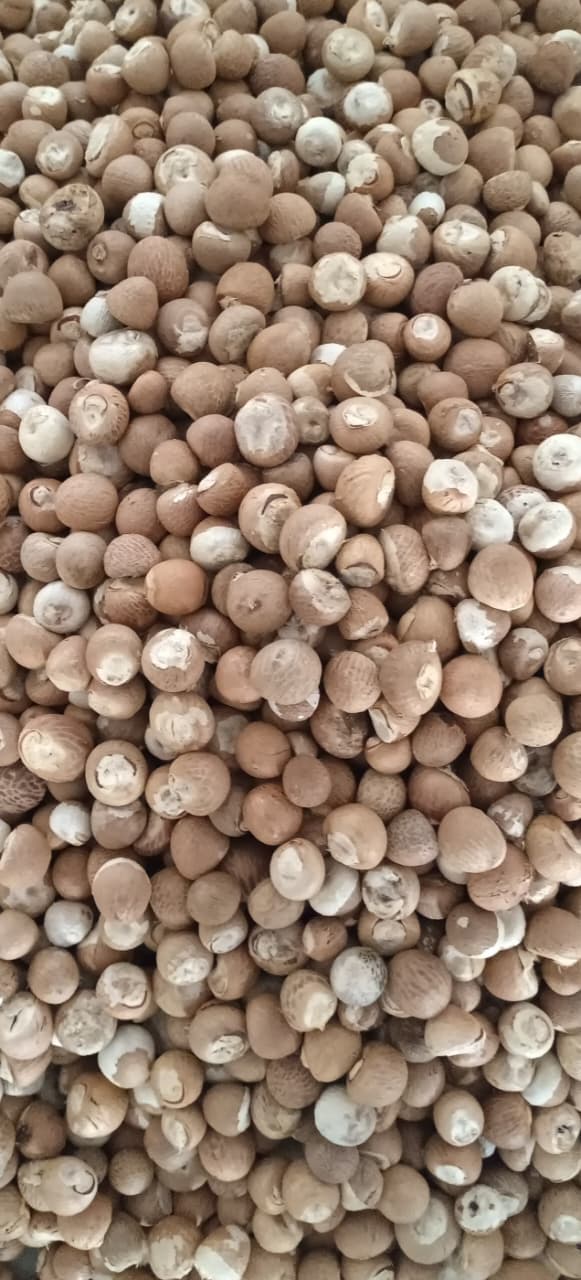
- Medium size, oval to round
- Average yield
- 3.67 kg chali (dried nut) per palm per year
- CPCRI recommended for
- West Bengal and the coastal areas of Karnataka and Kerala
- In Tamil Nadu
- The most commonly planted variety in the Erode belt

What makes Mohit Nagar different
From ICAR-CPCRI's description of the variety:
- Very uniform palms. CPCRI calls its greater uniformity the most important feature of this variety — the palms in a garden grow and bear alike.
- Well-placed bunches. Nuts sit loosely on the spikes, so they develop evenly, and sprays reach them more easily.
- Steady yield sooner. Its yield settles earlier than Sumangala and Sreemangala.
- Higher yield in trials. 23% more than Mangala and 84% more than South Kanara local in CPCRI's evaluation.
Mohit Nagar vs Mangala, Sumangala and Sreemangala
| Variety | Origin | Palm | Nut | Average yield (kg chali/palm/year) | Released |
|---|---|---|---|---|---|
| Mohit Nagar | West Bengal, India | Tall, uniform | Oval to round, medium | 3.67 | 1991 |
| Mangala | China | Semi-tall, early bearing | Round, small | 3.0 | 1972 |
| Sumangala | Indonesia | Tall | Oval, medium | 3.28 | 1985 |
| Sreemangala | Singapore | Tall | Round to oval | 3.18 | 1985 |
Source: ICAR-CPCRI, Arecanut Varieties, Extension Publication No. 67. Yields are averages under good management in CPCRI trials; newer varieties such as Swarnamangala and the dwarf hybrids VTLAH-1 and VTLAH-2 are listed on CPCRI's variety page.
Growing Mohit Nagar in Tamil Nadu
General arecanut practices from TNAU and ICAR-CPCRI — they apply to Mohit Nagar as to other areca varieties.
- Planting timeJune to December is the best season (TNAU).
- PitsAbout 90 cm × 90 cm × 90 cm (TNAU).
- SpacingTNAU recommends 2.75 m (about 9 ft) either way. Many Erode-belt farmers plant closer; we suggest at least 7 ft × 7 ft. Work out your tree count with the tree spacing calculator.
- First yieldWith good care, palms start bearing about 4 to 5 years after planting.
- FertilizerFor bearing palms (5 years and above): 100 g N, 40 g P₂O₅ and 140 g K₂O per palm per year (TNAU / ICAR-CPCRI). See the fertilizer guide or work out quantities with the fertilizer calculator.
- HarvestThree to five harvests a year (TNAU).
- IntercropsCocoa, black pepper, coffee, cinnamon, clove and citrus grow well under areca (TNAU).
- Watch forSpindle bug in young palms — see the spindle bug guide and the disease guide.

What yield can you expect?
ICAR-CPCRI gives an average of 3.67 kg chali per palm per year for Mohit Nagar under good management. As a rough reference, 500 bearing palms at that average would give about 1,835 kg of chali a year — real farms often get less in the early years, or with less water and manure. Check what chali is fetching today on our arecanut price page.
Common questions
What is Mohit Nagar arecanut?
Mohit Nagar (also written Mohitnagar) is a tall arecanut variety selected by ICAR-CPCRI from palms at Mohitnagar, West Bengal, and released for cultivation in 1991. It is known for very uniform palms and an average yield of 3.67 kg chali per palm per year.
Where does the Mohit Nagar variety come from?
From Mohitnagar in West Bengal. It is an Indian (indigenous) selection, evaluated and released by ICAR-CPCRI in 1991.
What is the yield of a Mohit Nagar arecanut tree?
On average 3.67 kg of chali (dried nut) per palm per year in ICAR-CPCRI's trials — 23% more than Mangala. Yield on a farm depends on water, manure and care.
Is Mohit Nagar better than Mangala?
In CPCRI's trials Mohit Nagar gave 23% more yield than Mangala and its palms are more uniform. Mangala is semi-tall, starts bearing early and has small, round nuts. Which suits you depends on your land and how you sell.
Is Mohit Nagar a tall or dwarf variety?
Tall. If you need short palms for easier harvesting, ICAR-CPCRI has released the dwarf hybrids VTLAH-1 and VTLAH-2.
How many years does Mohit Nagar take to give yield?
With good care, Mohit Nagar palms start bearing about 4 to 5 years after planting. CPCRI notes that Mohit Nagar's yield settles earlier than Sumangala and Sreemangala.
Does Mohit Nagar grow well in Tamil Nadu?
CPCRI released it for West Bengal and coastal Karnataka and Kerala, but it is now the most commonly planted variety in the Erode belt. Our own Mohit Nagar mother palms have stood and yielded in Erode district for 30 to 35 years and more.
Where can I buy Mohit Nagar plants?
At the KITE Agro nursery in Erode district, Tamil Nadu — 9–10 month old plants at ₹22 each (October 2026), raised from 30–35+ year old mother palms. Pick up at the farm or ask for delivery within about 100 km.
Related
- Mohit Nagar plants — KITE Agro nursery, Erode
- Arecanut in Tamil, English & other languages
- Arecanut (pakku) price today — Gobi & Bhavani
- How many arecanut trees per acre — spacing calculator
- Arecanut fertilizer dose & schedule
Sources: ICAR-CPCRI, Arecanut Varieties (Extension Publication No. 67) and arecanut varieties; TNAU Agritech, arecanut. Farm and nursery details are KITE Agro's own.